Thursday, 21 February 2019

Day ten - crossing the Strait

A bit of a sleep in!  What a treat! We were off southwards, our last night on the North Island.  Heading south we stopped in at a lake to see what we could find.  Lots of waterfowl out over the lake and a few cormorants as well. But nothing stuck out as unusual, so it was on to the next spot.
A bit further down the coast we stopped for coffee and then to a sewage ponds – what would a birding trip be with out at least one sewage pond!  Again, a good selection of waterfowl, including a few male shoveler that still had traces of breeding plumage, and our last dabchick (New Zealand grebe), probably for the trip.  Scaup were good to see again, and lots of grey teal.
Onwards and we called into a nice little wetland area, where we had some time up our sleeve, and a few waterfowl.  So we enjoyed the sun and spent an hour at leisure wandering around.  The dabchick at the sewage ponds hadn’t been our last, there were a few more here as well.  Which was nice.
We then grabbed some lunch and headed south, stopping at a little way south where we had nice views of the coast and a pretty decent flock of white-fronted terns. We checked the terns to see if we could find anything different, but a good mix of various aged white-fronted terns. A few juveniles amongst which was nice to see.
After lunch we drove through to the Ferry Terminal where we cued for the ferry, looking out into the harbour.  We boarded, found a place on the ferry as we departed, seeing a few fluttering shearwaters as we cruised through the enclosed waters.  More white-fronted terns, red-billed gulls, etc.  As we came out into open water it was apparent the winds were pretty high, but from the north.  So, we scanned, and started to pick up more fluttering shearwaters, and then a good number of flesh-footed shearwaters as well.  One or two sooty shearwaters as well, and then our first albatross of the trip – distant, but recognisable as white-capped albatross. We did see a couple more over the time in the strait, but hard to ID at the distance they were – certainly white-capped or Salvin’s…more to come!
We also had a couple of common diving petrels fly with us, good to see after the very brief one we had seen on the Hauraki Gulf.  As we entered the Tory Channel we got a little more shelter, with a few gannets and red-billed gulls.  We got a few more spotted shags along the way, and then a brief Parasitic jaeger, before we docked.  We headed into Picton, but a slight hiccup has us in Blenheim, and dinner at a great restaurant before a well earnt sleep.

Bird of the day– White-fronted tern x4, common diving petrel x1, spotted shag x2, white-capped albatross x1
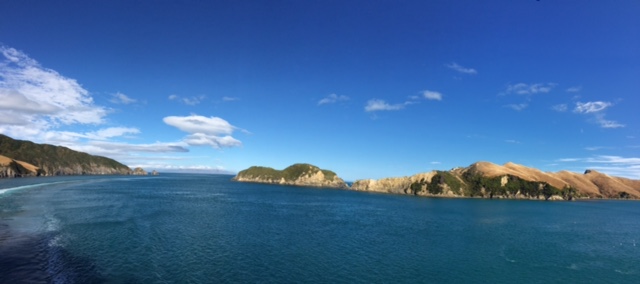
Good bye North Island (in the distance through the gap), hello South Island

Day nine - early bittern

Up early again, and out the door just after sunrise as we headed for a bird we had not seen at two of the three possible spots…Australasian bittern.  We arrived at the location, and got into ‘sneaky’ mode. The wetland was full of ducks, a few black swans and other things.  Scanning bits of the edge through vegetation allowed small parts of the wetland to be searched, hopefully without any bittern that were present seeing us.  And bingo, within a few minutes we had one, skulking along in the open.  The scope was on it quickly and everyone got a look, but it must have seen us at least a bit as it headed back into the vegetation a short way, but then stood there still visible for everyone to get a nice long look.  Excellent – not an easy bird, and certainly one that is tricky everywhere that it exists.  We watched it for a bit longer as it preened, searching for any others around the wetland, but no more were found.
We spent some time checking through the waterfowl, and the bittern slowly moved into the vegetation and out of sight.  So we headed back to the van and made the decision to head to a forest patch, to give it another go for long-tailed cuckoo and falcon.  We arrived and stood overlooking a lookout area. There was a bit of wind and it was much cooler than back in Napier.  We spotted a couple of harriers, but they didn’t elicit a response from any falcon. We hadn’t heard any cuckoos, so headed down and did a short walk, spotting a few robin, grey warbler, and the odd rifleman along the way.  A nice walk, but the wind was making it a little hard to hear things and it wasn’t terribly birdy – certainly our targets were not evident.
We headed back towards Hastings and made a quick stop for lunch and then a great spot for pipit.  We sat eating lunch, hoping for one to appear and a few moments later there was one right beside the van! Perfect, excellent views of this smart little bird.  We spent some time enjoying the scenery, the pipit and our lunches, and then off to the south we headed.  We made a couple of quick stops along the way, heading to the Manawatu Estuary.  The tide was well out, but we scanned and could see bar-tailed godwits, knot, pied oystercatcher and banded dotterel, and also a couple of wrybill.  There were a couple of white-fronted terns as well, with a few other bits and bobs, and then we headed to the accommodations, checked in and had a rest before dinner.  An excellent dinner with some lovely food at a nearby restaurant, before a good night’s sleep.

Bird of the day– Australasian bittern x8
Sunny skies and great views

Pipits sure are hard to find around here...

Tuesday, 19 February 2019

Day eight - ducks and crakes

We headed out early to a wetland area, in the hope of seeing Australasian bittern. This species is not that easy to see in either New Zealand or Australia, and so it is definitely on the ‘wish to see list’.  We slowly drove an area keeping an eye out, but nothing except a few purple swamphens (Pukekos).  We stopped the van and decided to stand and keep watch, looking to the skies also in case of a flying bird.
Problem was we kept getting distracted!  There were fernbirds calling all around the place, but none seemed to want to sit at the top of the vegetation and show themselves, and there were spotless crakes all around us as well.  One of them decided to ‘not very quietly’ creep through the reeds at about waist height, showing itself as it went.  Welcome distractions, and as there were no bittern to be seen, very welcome. We decided to head and check out a bunch of black-billed gulls and cormorants – getting nice side by side views of little pied, great and little black cormorants.  And rather convenient was the fact that the little pied seemed to show almost every plumage, from full white all the way down, to just a touch of a white chin.
We also watched scaup, dabchick, and black swan, and then a nice grey gerygone showed itself off well.  We decided to move on, but again a pair of fernbird got us distracted, and this time really showed quite nicely.  So very happy.
We headed back to the accommodation, packed the van, and then headed out to the river in search of our main target – blue duck.  We pulled up at our first spot, and there just a small way down the river was a blue duck – wow!  Sometimes it happens like that, sometimes it definitely doesn’t!  The bird was an immature, but we had great views of it in the water and then perched on a rock.  Through the scope you could clearly make out the shape and structure of the bill, and we all had extended views.  It then flew off up the river, and we realised there was another pair of adult blue duck just a bit up the river, so we headed further upstream and got really nice views of these guys too.
We spotted miscellaneous finches, silvereye and more grey gerygone, before deciding to head back into town, grab some lunch, fuel and then head off towards Hawkes Bay.  The drive was through some spectacular countryside, so we had plenty to look at, before arriving at a forest reserve.  We had lunch and then wandered a trail looking out for some of the forest specialties we needed.  We got good views of rifleman, and then even better views, and then good views of a tomtit, and then even better views.  Great to see these little birds right beside us, really showing themselves off.  There were red admirals around, as well as some nice mistletoes about to burst into flower, and lots of other cool trees and shrubs.  We had more grey gerygones, whitehead, bellbirds, and tui…ears were kept sharp for long-tailed cuckoo, but not a peep all afternoon.  But all of a sudden we did have a burst of falcon call, but from under the canopy couldn’t see anything.  Back at the carpark we kept our eyes skyward…”there’s one…no just a harrier…but there’s a falcon!” as it swooped in to see off the harrier!  A very fleeting glimpse, with hopefully better to come.
We headed on into Napier, stopping quickly at a small park to see two plumed whistling ducks, as well as Australasian coot, grey teal and our first Australasian shoveler.  A lone cattle egret was a bit of a surprise!  We then headed to a wetland area to see what we could find, and there were a lot of grey teal, a small flock of Royal spoonbills, and our first black-fronted dotterel.  These little stunners were relatively common and we had some nice looks at them and banded dotterel.  Down the end of the wetland we spotted two white-winged black terns, and so headed for a closer look, spotting some sandpipers in the process.  But hang on, there’s a spotless crake, out in the open. Our second location for this species today, and third for the trip!  Nice one! We got better views of the white-winged black terns on the ground, and then feeding over water, and then checked the sandpipers, and the first was a pectoral sandpiper!  Excellent, there were a couple of sharp-tailed sandpipers around as well, so pretty good birding.
It was then on to our accommodation, checked in to our rooms, freshened up, and then a lovely dinner near the water.  Life is good!

Bird of the day– Blue duck x5, Tomtit x2, Pectoral sandpiper x1

The gang looking for a kiwi

Spotting shorebirds

Monday, 18 February 2019

Day seven - forest birding

The fact that a morepork was still calling when we got up signifies this was an early start to the day!  We had quite a drive ahead of us, and so being up early and on the road just after 0700 was called for.  We grabbed lunch quickly after packing the van, and then headed south from Whitianga. We made a short stop at the same shorebird stop as yesterday after leaving Miranda, and the tides were a bit better and this time there were seven cattle egret (some in breeding plumage and carrying sticks as nesting material!) and three Far Eastern curlew – nice additions to the list, and the latter was a lifer for some.  A wrybill right in front of us was also a treat!
We carried on south, checking out a wetland area, but unfortunately no bittern were evident.  Always worth a try with this tricky bird.  Driving some back roads we managed to find a couple of California quail, and a few ducks and other things, but no bittern.  Carrying on south after a quick coffee and fuel stop, we were really into falcon country and so eyes were peeled.  Especially after all the coffee!!
We pulled into Pureora Forest Park just after midday, and had lunch overlooking a good area of forest.  Kaka fly bys were had, and a couple of yellow-crowned parakeets.  But as we finished lunch we headed in to the forest to do a short walk.  Impressive trees were not the only things to spot, and within a few minutes we had really nice views of kaka, followed by a juvenile shining cuckoo begging and still being fed by two adult (and rather bedraggled) grey warblers.  Poor little guys!  We were then on to a couple of nice yellow-crowned parakeets, and the next thing of interest was a Peripatus!  Cool – not often you get to find one of these, and it was the first log that was looked in!  There were plenty of North Island robins to follow, but no sign of tomtit, although fantail and whitehead were both seen.
After a nice walk we did a little drive and then another short walk.  We spent a little time scanning for falcon also, but to no avail, although the resident pigeons were out in full force still doing display flights.  The walk saw a few more robins, more kaka, and a snatch of long-tailed cuckoo call, but no sightings of the latter.  Next up was a family of rifleman that were clearly feeding juveniles, and kept bouncing around in the branches of a tawa tree.  Not the easiest to see!
We did a bit more driving and a bit more looking and listening for falcon/long-tailed cuckoo, but then it was time to head towards Turangi.  So, we drove some roads through excellent forest on the way, but not a squeak from either.  Ah well, worth a try.  The visibility was great and with very little cloud beautiful views of the mountains as we headed towards Turangi.  A beautiful Italian meal, a few drinks and it was time to rest our weary heads!

Bird of the day– Kaka x5, yellow-crowned parakeet x1, rifleman x2

Guardian of the forest

Looking for rifleman in the trees!

Sunday, 17 February 2019

Day six - wobbly seas and Pterodromas

Up before the sun, and headed back down to the Stilt Ponds for a look.  The tides were not quite right, with high tide having been before first light.  But there was still a lot of birds gathered in front of the hides.  We checked out the Stilt Ponds first and found four sharp-tailed sandpipers in nice light feeding in shallow water, and also a curlew sandpiper.  So really nice views of things we had seen yesterday but not nearly so well!  Lots of wrybill in attendance and also a lot of banded dotterel including some still showing good amounts of breeding plumage.
We spent time scanning through the birds, which is always fun, and getting nice looks of the wrybill, seeing the characteristic bent beak.  We then moved slightly and continued to scan more flocks of shorebirds, finding the Pacific golden plover, and checking amongst the godwit and red knot.  Distant black-billed gulls, lots more wrybill, but nothing new, so we headed back to the accommodation to pack the van and get underway.
On the road, we made a quick stop at another shorebird spot, seeing a pheasant on the way, and then finding more banded dotterel, black-winged stilt, and a couple of wrybill.  Also better views of Royal spoonbill and some grey teal, plus a couple more sharp-tailed sandpipers.  Carrying on we got up and over the Coromandel Range and then had a coffee break in Tairua, before heading northwards to Whitianga.  Bakery stop for lunch, which we ate in our Motel rooms, readying ourselves for our afternoon pelagic.  The forecast had not been great, with pretty breezy conditions, but it had certainly dropped off now, and although there was the odd little shower of rain, it looked a lot better than it could have been out towards the coast.
We headed down to the Marina, gathered up, and then headed to the boat, where we were met by our skipper Dawson.  After our briefing we made our way out of the Marina and out into Mercury Bay.  A reef egret was the first thing to get us looking, and then pied cormorants.  As the swell started to pick up we each found a spot on the boat and hunkered down.  It was a little bumpy, but not bad, and we spotted a couple of Parasitic jaegers on the way.  Further out, Buller’s and fluttering shearwaters started to make an appearance, and as we got to our location, a few Pterodroma petrels started to zip past.  Dawson set about getting the chum ready and before long we had a nice slick going. The birds were straight in to us, with Buller’s shearwaters, black petrel, and then flesh-footed shears coming in to feed.  White-faced storm-petrel were not far behind, and then a few fluttering shearwaters, as Cook’s petrels made a near constant stream of 1-2 birds past the stern of the boat. Nice short gaps between each bird, and nice and close, which doesn’t always happen.  Each one was studied as it came past, but it was a near constant stream of Cook’s, showing the longer bills, less bulky body-shaped and more flappy flight.  About an hour into it a NZ storm-petrel showed up, heading up into the slick after a brief appearance, but as is normal the bird reappeared several minutes later as it swung around the bow and back past the stern nice and close for everyone to get onto it!  Awesome! We had good numbers of birds over the slick, lots of white-faced storm-petrels (maybe 25+) and 5+ black petrels, and then the stream of Pterodromas seemed to dry up.  Hmmm…about 15 minutes later they reappeared, but this time they were shorter billed, often darker naped, and had a bulkier chest and short neck…Pycroft’s!  And just like that, the stream of near constant Cook’s petrels changed to Pycroft’s. We had excellent views of 15+ birds as they came past the stern, and everyone was able to see multiple birds, including lighter and darker plumaged birds.  We had several more NZ storm-petrels come in, with two visible for much of the rest of the time.  We also had a brief appearance by a mako shark in the slick, before it disappeared into the depths.
About 1710, the chum had run out, and it was time to start heading back in.  We had a few more likely Pycroft’s come past as we started the journey back in, with more Buller’s and fluttering shearwaters, and closer to home another Parasitic jaeger.
Back on land the legs stopped wobbling so much, and we headed for a tasty pizza meal, checklist time, and then bed.  Tomorrow will be an early start, but journeying to the centre of the North Island is going to be exciting!

Bird of the day– Pycroft’s petrel x6, wrybill x1, sharp-tailed sandpiper x1
Out on the ocean waves